
Research at the Aquaculture Microbiology Lab is driven by the view that fish disease is an emergent outcome of interactions between pathogens, hosts, and the environment.
Rather than addressing disease as an isolated event, we focus on the biological processes that shape disease emergence, persistence, and control across aquatic systems.
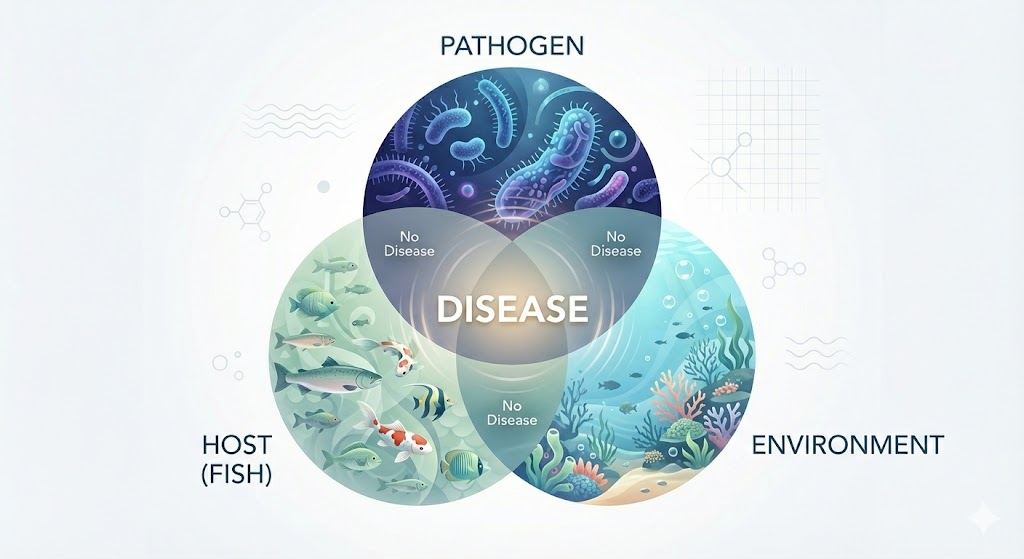
Central to our work is the study of microbial adaptation under selective pressure and the consequences of this adaptation for pathogen fitness, physiology, and virulence. This perspective allows us to connect fundamental microbiology with applied questions relevant to aquaculture health, sustainability, and the reduction of antibiotic dependence.
Core research directions
Microbial adaptation and fitness trade-offs
A main research direction of the lab is the study of how bacterial pathogens adapt to external pressures and the consequences of this adaptation for fitness, physiology, and virulence.
We investigate resistance development not as an endpoint, but as a biological process associated with measurable trade-offs that can constrain pathogen success.
Host–pathogen interactions and disease outcome
Our research examines how pathogen traits interact with host biology to shape infection dynamics and pathological outcome.
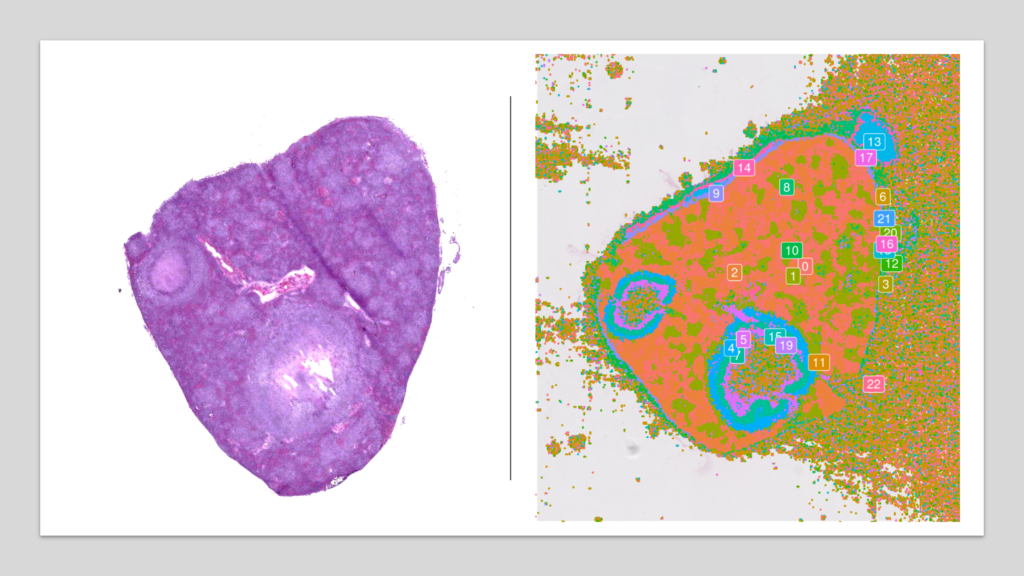
Using a combination of pathology, microbiology, modern -omics technologies and experimental infection approaches, we study how host species, developmental stage, and physiological context influence disease progression and virulence expression.
Disease prevention and biologically informed control strategies
Building on mechanistic insight into pathogen behavior and adaptation, the lab explores prevention-oriented approaches to fish health.
Our research focuses on disease prevention strategies that build directly on an understanding of pathogen biology and host–pathogen interactions. In this context, we develop and evaluate targeted approaches such as phage therapy, which allows precise intervention against specific bacterial pathogens, as well as autogenous vaccines that are tailored to the needs of individual farms or disease outbreaks. Together, these approaches support effective disease control while reducing reliance on antibiotic treatments in aquaculture.